

External Shutters, Awnings or Solar Screens? Matching the Shade to Each Window for a Hunter Summer
Choose shade by the way each window faces: government guidance points to adjustable vertical shading, such as external blinds, for east and west glass, horizontal shading above north windows, and shade fixed outside the glass so the sun's heat is stopped before it gets in.
Shade each window for the way it faces. That is the answer you get when you lay the NSW Government's external shading guide beside the Australian Government's Your Home design guide. Neither page puts the two lists together, so here is the working.
Your Home sorts windows by direction. It recommends fixed or adjustable horizontal shading above the window, extended past each side for north glass, vertical louvres or blades for east and west, and adjustable shading for north-east and north-west. Energy NSW lists awnings, solar screens, and shutters or exterior blinds among the types of external shading.
Our reading of the two together:
- Awnings are horizontal shade over the window, the shape Your Home describes for north glass, and retractable ones let in winter sun.
- Shutters and exterior blinds are the adjustable vertical kind. For east and west windows, Your Home says adjustable vertical shading, such as external blinds, is the optimum solution.
- Solar screens replace insect screens, block heat and UV, and keep views clear, so they suit a window where the outlook matters.
This is worth sorting before the hot months. The Bureau of Meteorology's outlook issued 15 October 2026 had above-average maximum temperatures as very likely (greater than 80% chance) across much of Australia for November to January, with the highest chances of unusually high maximums (over 70%) across parts of New South Wales.
At Maitland Shutters our advice is simple: start with the east and west glass, then north-west, then any skylight. The sections below explain why, how to use each type through the year, and what it costs.
Which external shading for windows suits each side of the house?
- 1North wall: horizontal shading above the window, extended past each side
- 2East and west walls: adjustable vertical shading, such as external blinds
- 3North-east and north-west corners: adjustable shading
- 4Skylight: almost twice the heat of an unprotected west-facing window of the same area: external blinds or louvres
North. Horizontal shade above the window, wider than the window itself, is Your Home's call. If you are building or extending, its rule of thumb is an eave width of 45% of the sill-to-eave height, and it warns that badly designed fixed shading can block beneficial winter sun. A retractable awning sidesteps that by folding away in winter.
East and west. This is the hard side. Your Home says low-angle morning and afternoon summer sun is harder to shade, and that deep verandas and pergolas may still admit very low-angle summer sun. Shade you can tilt or close across the glass deals with sun coming in nearly flat. For the afternoon side in detail, see our guide to the west-facing room.
North-east and north-west. Your Home recommends adjustable shading here, so the winter sun can come in when you want it and be shut out when you don't.
| Type | What NSW says it does | Installing | Where it fits (our matching of Your Home's orientation guidance) |
|---|---|---|---|
| Awnings | Cool windows, doors and outdoor areas; retractable ones let in winter sun | Retractable awnings: should be professionally installed | Horizontal shade above north windows |
| Solar screens | Replace insect screens, block heat and UV, keep views clear | Often DIY | Windows where you want to keep the view |
| Shutters or exterior blinds | Reduce heat, add security, protect against storms | Should be professionally installed | Adjustable vertical shading for east and west |
| Last column is our reading of the two government pages together, not a ranking. | |||
Each type has a trade-off. Awnings shade windows, doors and outdoor areas, but they have to come in when the weather turns. Solar screens keep the view, and Energy NSW says they can often be fitted yourself. Shutters and exterior blinds reduce heat, add security and protect against storms, and they are heavier, so they need a proper install.
These government pages are about shade fixed outside the glass. If you are weighing shutters inside the room against shutters outside it, our guide Interior or Exterior Aluminium Shutters? covers that choice, and Shutters vs Blockout Blinds compares coverings inside.
Why does shading outside the glass beat shading inside it?
Shade outside the glass
- blocks the sun's energy before it passes through the glass
- effective shading can block up to 90%
Bare glass
- radiant heat re-radiated inside cannot easily escape back out
Position is the whole point. The NSW Government says external shading like shutters and awnings block the sun's energy before it passes through the glass, which stops the window creating a greenhouse effect.
Your Home explains what happens when nothing stops it. Unprotected glass is often the greatest source of heat entering a home. Radiant heat passes through the glass, is re-radiated inside, and that longer-wavelength heat cannot easily escape back out.
The numbers are large. Direct sun can generate the same heat as a single bar radiator over each square metre of a surface, and effective shading can block up to 90% of it. Federal guidance on energy.gov.au says almost 90% of a home's heat is gained through windows.
Shading isn't only for the hottest climates, and insulation alone won't cool a house: Your Home warns that an insulated house left unshaded in summer can keep its built-up heat inside, creating an "oven" effect.
Which windows should you shade first?
One summer day
Morning
- east sun: heat gain starts while the house is still cool
Afternoon
- heat has built up through the day
- low-angle west sun, harder to shade
Early evening
- discomfort from the day's cumulative heat
West. The NSW Government lists homes with west-facing windows that get intense direct sun first among those external shading suits. It is the window that heats the house when you least want it.
East. Don't skip it because mornings feel cool. Your Home says east glass can be as problematic as west: heat gained in the morning starts a cumulative process that causes discomfort in the afternoon and early evening.
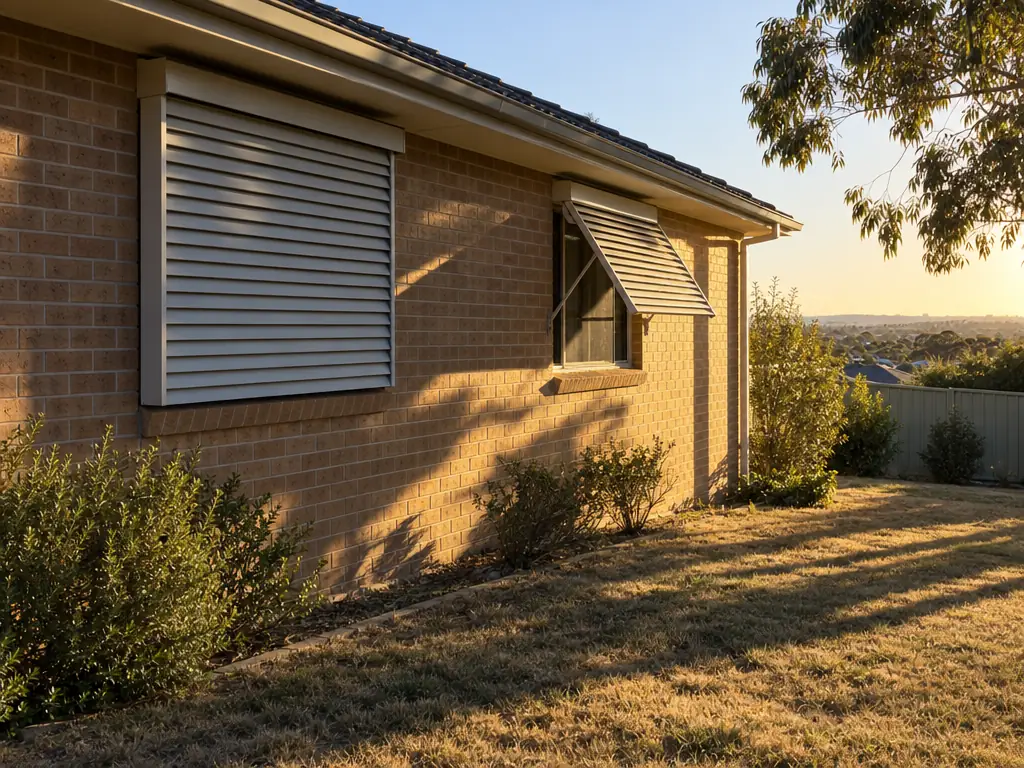
North-west. It catches strong afternoon sun in summer, and adjustable shade lets the winter sun in when you want it.
Skylights. Often forgotten, and the worst of the lot. Your Home says roof glazing receives almost twice as much heat as an unprotected west-facing window of the same area, and recommends external blinds or louvres to protect it.
The NSW page also names two other reasons people shade: using the air conditioner less, and less glare and UV fading of furniture and floors. If a room's floorboards or couch are fading, that window belongs near the top of your list.
How do you use external shading through the year?
Shading through the year
- Source: NSW Government
- Source: energy.gov.au
- Source: NSW Government, energy.gov.au
- Source: NSW Government
External shade only works when it is in the right position. The NSW Government's advice is to use your shades during the hottest parts of sunny days. The federal guidance for window coverings adds the evening half: open them at sunset to let the evening breeze through.
In winter the job reverses. NSW says to keep shades retracted or open, especially on south-facing windows, to take in free solar heat. For coverings in cooler months, energy.gov.au says open them when the sun shines and close them when it goes.
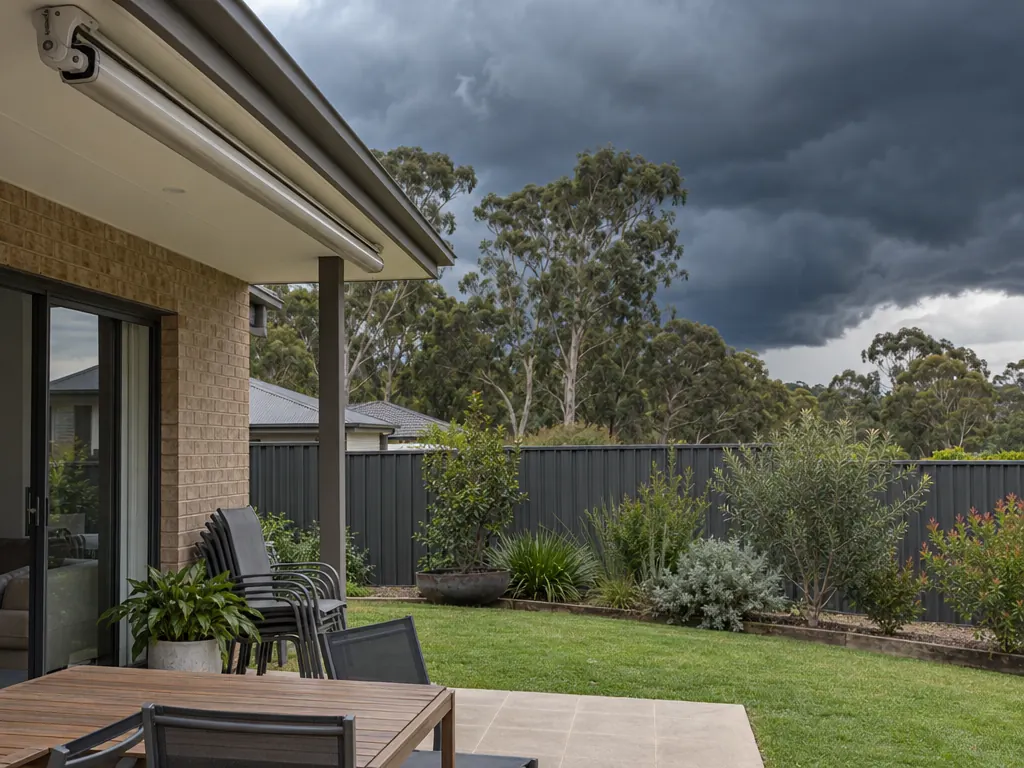
Then there is the weather. NSW says to retract awnings in storms or high winds to prevent damage. That matters this summer. The same outlook notes that warmer waters around Australia can fuel storms and rain systems, increasing the potential for high-intensity rainfall. Know how your awning comes in, and who will bring it in when you're at work, before the first afternoon storm.
What does external shading cost, and can you fit it yourself?
Different units: one item of shading versus one window of glazing.
The NSW Government puts external shading at $200 to $5,000 or more (checked November 2026). The bottom of that range is a custom DIY solar screen; the top is a large motorised retractable awning. It is a range across very different products, not a price for any one of them.
Who fits it depends on the weight. NSW says simpler options like solar screens can often be DIY, while larger, heavier items such as retractable awnings or shutters should be professionally installed so they are mounted safely and securely. For complex projects, it says to consult a licensed installer.
Don't budget on a rebate. There is currently no NSW or Australian Government incentive or rebate for external shading. The NSW Home Energy Saver loans are pitched at other upgrades, such as double glazing; our guide NSW Home Energy Saver Program: Are Shutters Covered? goes through what it does and doesn't fund.
On savings, the NSW Government's headline estimate is 40% per year on your heating and cooling bills by reducing the time your air conditioner is running. Treat that as the government's figure, not a promise for your house. The same page carries a case study of one NSW household that fitted insulated roller shutters to its north, east and west windows and reports about 10 degrees off the house temperature. That is one family's account, not a typical result.
For contrast, the NSW windows page prices double glazing at $600 to $2,000 or more per window installed (checked November 2026), and even that page advises using blinds, shades and curtains with double glazing to control sunlight. Our guide Double Glazing or Shutters? sets the two side by side.
Does a heritage home in Maitland need approval for external shading?
Is the house heritage-listed, or in a Heritage Conservation Area, in Maitland LGA?
YesIn most circumstances, development consent is required for work
ThenIf you think the job counts as minor works under the Maitland LEP, a heritage minor works application ($110, checked November 2026) can confirm in writing whether your works need consent
ThenDon't start until you have written approval
NoThis Council heritage process doesn't apply; ask Council about any other approval
Possibly, so check before you change the outside. Maitland City Council says that in most circumstances, development consent is required for work on a heritage house or a property in a Heritage Conservation Area.
If you think the job counts as minor works under the Maitland LEP, a heritage minor works application ($110 fee) (checked November 2026) can confirm in writing whether your works need consent, and Council says works must not start before written approval. For the look and fit of shutters on an older house, see our guide to shutters for a period home.
Effective shading can block up to 90% of the sun's heat, and no government rebate covers it
- Effective shading can block up to 90% of the heat from direct sunSource: Your Home
- Roof glazing: almost twice the heat of an unprotected west-facing window of the same areaSource: Your Home
- NSW Government estimate: 40% per year on heating and cooling bills, not a guaranteeSource: Energy NSW
- External shading: $200 to $5,000+, checked November 2026Source: Energy NSW
- No NSW or Australian Government incentive or rebate for external shadingSource: Energy NSW
- Maitland heritage minor works application: $110, checked November 2026Source: Maitland City Council
Put together, the government numbers point one way. Shade blocks most of the sun's heat when it sits outside the glass, the low east and west sun needs shade you can adjust, a skylight takes the most heat of any glass in the house, and the cost of doing it varies by product, with no rebate to lean on.
Your next step before the hot months
Do a sun walk on the next clear day. Note which windows take direct sun in the morning, which take it after lunch, whether you have a skylight, and which rooms have fading floors or furniture. If the house is heritage-listed or in a Heritage Conservation Area, put a call to Council on the list too.
Then bring that list to Maitland Shutters. You can book a measure and quote and we'll start with the windows the sun hits hardest.
Sources
- https://www.energy.nsw.gov.au/households/upgrades/external-shading
- https://www.yourhome.gov.au/passive-design/shading
- https://www.energy.gov.au/households/windows
- https://www.bom.gov.au/climate/ahead/outlooks/
- https://www.maitland.nsw.gov.au/residents/building-renovations/heritage-development-works
- https://www.energy.nsw.gov.au/households/upgrades/windows
Pictures in this guide are illustrations, not photos of our jobs.
Free in-home measure & quote
The measure is free. The advice comes with it.
Every window here is made to measure, so an accurate price only exists after we have seen your windows and your light. Tell us about the rooms you are thinking about and we will arrange a time, measure each opening, and leave you with a written quote and a straight recommendation. No obligation either way.