

Double Glazing or Shutters? What Each Costs and Fixes in an Existing Hunter Home
Double glazing replaces the glass and often the frame to slow winter heat loss, at $600 to $2,000+ per window installed depending on size and frame (checked November 2026), while shutters shade the windows you already have against sun and glare, so the better buy depends on which problem your house actually has.
Shutters or double glazing: the short answer
How much heat moves through windows
They are two different jobs. Double glazing replaces the glass, and often the frame, to slow heat escaping. Shutters go over the window you already have and stop sun and glare before they reach the room.
Start with cost, because that's what most people are weighing. The NSW Government puts double glazing at $600 to $2,000+ per window, installed (checked November 2026), depending on window size and frame. Spread that across a house and it climbs fast. The NSW figure is per window, so a whole-house job multiplies it by the number of windows you replace. The state's zero-interest loan of up to $15,000 (checked November 2026) would stretch to about 7 windows at the top of that range ($15,000 ÷ $2,000 = 7.5) or 25 at the bottom ($15,000 ÷ $600 = 25). That working is also our estimate.
Windows matter either way. YourHome says up to 40% of a home's heating energy can be lost, and up to 87% of heat gained through them. Which of those two numbers you feel in your house decides the spend.
If winter cold is the complaint, the glass and frame are where the heat goes. If summer heat on east or west glass is the complaint, YourHome calls shading the best way to reduce unwanted heat gain. At Maitland Shutters, our view is simple: name the problem before you price the fix.
How much does double glazing cost?
| Item | Figure as published | What it covers |
|---|---|---|
| Double glazing, installed | $600 to $2,000+ per window | Depends on window size, frame material (vinyl, wood, fibreglass) and other featuresSource: NSW Government, Double glazed windows |
| Double glazing, stated saving | $500+ per year on heating and cooling bills | Depending on your homeSource: NSW Government, Double glazed windows |
| External shading (shutters, awnings, solar screens) | $200 to $5,000+ | From a $200 DIY solar screen to a $5,000+ motorised awning, so not a shutter priceSource: NSW Government, External shading |
| External shading, stated saving | 40% per year on heating and cooling bills | By cutting air-conditioner running timeSource: NSW Government, External shading |
| Dollar amounts checked November 2026. | ||
The NSW figure is $600 to $2,000+ per window, installed (checked November 2026). Window size, frame material (vinyl, wood or fibreglass) and other features move it within that range.
The same page puts the saving at $500+ per year on your heating and cooling bills, depending on your home (checked November 2026). It pitches double glazing as best for people building or renovating, or living with old, single-pane, leaky windows. That's the government's figure, not a promise for your house.
If you go ahead, NSW advises at least 3 quotes from licensed, insured installers, Low-E coated glass, and a professional installer so the windows are sealed correctly and meet standards.
Shutters have no government price. The NSW external shading page lists $200 to $5,000+ (checked November 2026) for shutters, awnings and solar screens together. That range runs from a $200 DIY solar screen to a $5,000+ motorised awning (checked November 2026), so it isn't a shutter price. For shutters, the number to weigh against a double glazing quote is your own written quote. Our guide to what shutters cost in Maitland explains how that pricing is put together.
What does double glazing fix, and what do shutters fix?
Summer afternoon, west glass
- Top Aluminium double glazed SHGC 0.69 vs single 0.77
- Bottom Shading blocks the sun's energy before it passes through the glass; effective shading blocks up to 90% of direct sun's heat
Winter night
- Double glazing can reduce heat loss by up to 30%
Double glazing is a heat-loss fix. Double-glazed windows can reduce heat loss by up to 30%, and in Australia double glazing is usually enough, with triple kept for extremely cold climates.
Double glazing isn't only for cold places: YourHome says double-glazed units can deliver better energy performance for all climates, especially in heated and air-conditioned homes.
Shading is a heat-gain fix. Effective shading can block up to 90% of direct sun's heat, and NSW says external shading such as shutters and awnings can block the sun's energy before it passes through the glass. Shutters inside the glass cut glare but do less for heat: YourHome says internal blinds are much less effective than preventing the solar heat from entering the window in the first place. For east and west glass, YourHome calls adjustable vertical shading such as external blinds the optimum solution.
NSW's own figure for external shading is a saving of 40% per year on your heating and cooling bills, by cutting how long the air conditioner runs. Again, that's the government's stated figure, not a guarantee.
Here's the catch for a west-facing Hunter room. Swapping single for double glazing in an aluminium frame only moves the solar heat gain coefficient from 0.77 to 0.69. The new glass still lets the afternoon sun in. Shading the glass deals with that sun. Our guide to the west-facing room goes deeper on afternoon sun, and interior or exterior aluminium shutters covers which side of the glass suits.
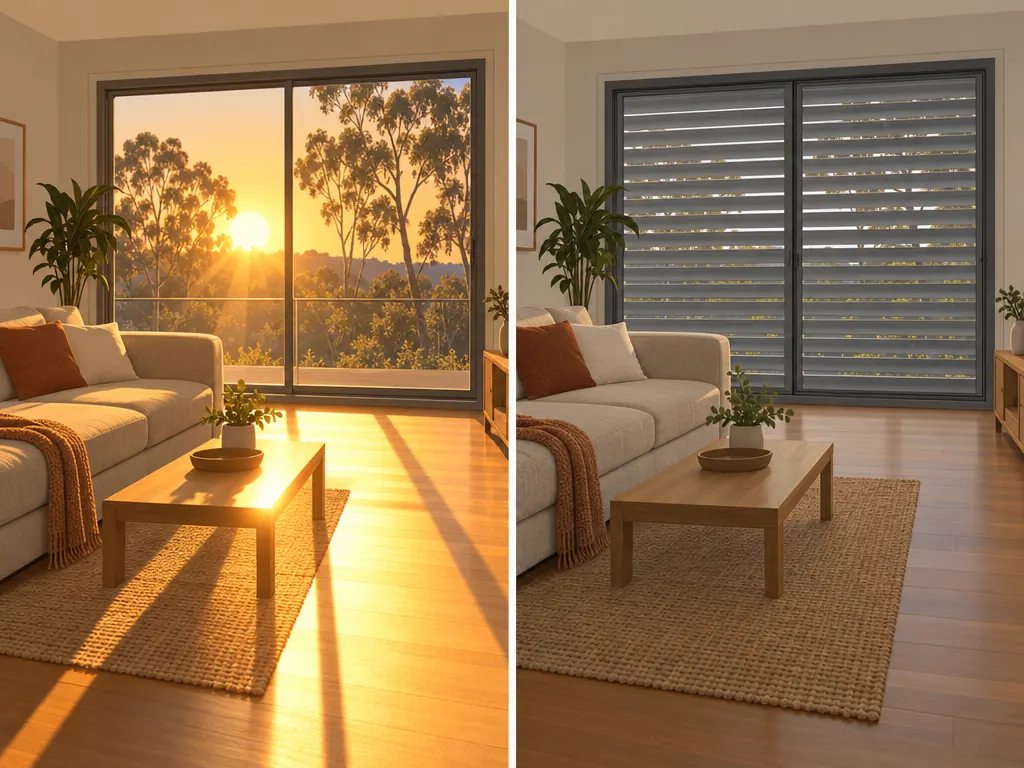
Even the government's double glazing advice pairs the two. It says to combine glazing with draught-proofing and use blinds, shades and curtains to add insulation and control sunlight.
Is double glazing worth it on an existing home?
Whole-window U-value (Uw), lower is better
SHGC, lower lets in less sun heat
Look at the frame, not just the glass. Aluminium conducts heat and lowers a unit's insulating value unless it is specifically engineered to reduce this, as a thermally broken frame is.
YourHome's WERS table shows how much the frame matters. An aluminium frame with single 3mm clear glass rates Uw 6.9. Double glazing in an aluminium frame rates 4.2, and in a timber or uPVC frame it rates 3.0.
Our working on those figures: aluminium double glazing is about 39% lower than aluminium single ((6.9 − 4.2) ÷ 6.9). Timber or uPVC double glazing is about 57% lower ((6.9 − 3.0) ÷ 6.9). That gap of roughly 18 points is the frame, so a quote that keeps plain aluminium frames is a different product from one that doesn't.
To compare quotes, ask for the WERS ratings. Australian window U-values generally fall between 2.0 and 10.0, and lower means better insulation. A lower SHGC means less sun heat gets in, but it comes at the expense of less winter solar warmth. The same source says hinged windows such as awning and casement generally leak less air than sliding windows.
Toughened or laminated glass is a safety choice, not an energy one: YourHome says toughened glass has no thermal or acoustic benefits over other glass of the same toning or thickness.
If foggy glass on winter mornings is part of why you're asking, YourHome links keeping surfaces above dew point to double or triple glazing and thermally improved frames. Our guide to condensation on windows in winter covers the cheaper habits first.
What are the cheaper options for existing windows?
| Option | What it does | Its limit |
|---|---|---|
| Draught-proofing (foam strips around frames, sealant or gap-filler rod around architraves) | Stops air leaks; signs are rattling or whistling in wind, moving curtains, a breeze near closed windows | Seals gaps only, doesn't change the glass |
| Close-fitting coverings | Reach the floor, wrap to the wall either side, lined | Work only when opened and closed with the sun |
| Secondary glazing (acrylic or glass sheet inside the frame) | Improves the window; good noise control | Won't perform as well thermally as a manufactured double-glazed unit because the edge can't be fully sealed |
| Window film | Can halve a window's SHGC; suits east and west glass | May reduce light; risk of thermal cracking on glass in direct sun; use an accredited installer |
| External shutters and other external shading | Block the sun's energy before it passes through the glass | Larger items like shutters should be professionally installed |
| Interior shutters | Cut glare and add a layer at the glass | Much less effective on heat than shading outside the glass |
Between doing nothing and replacing every window sit several options. YourHome says window furnishings such as louvres, blinds and curtains are especially useful to add to existing windows. It also calls replacing windows one of the most effective renovations for comfort, so both are fair options for an existing home.
Seal gaps first. It's the cheapest step and it helps whichever fix you choose. Use foam strips around frames, and sealant or gap-filler rod around architraves. The signs of a gap are rattling or whistling in wind, curtains that move, and a breeze near a closed window.
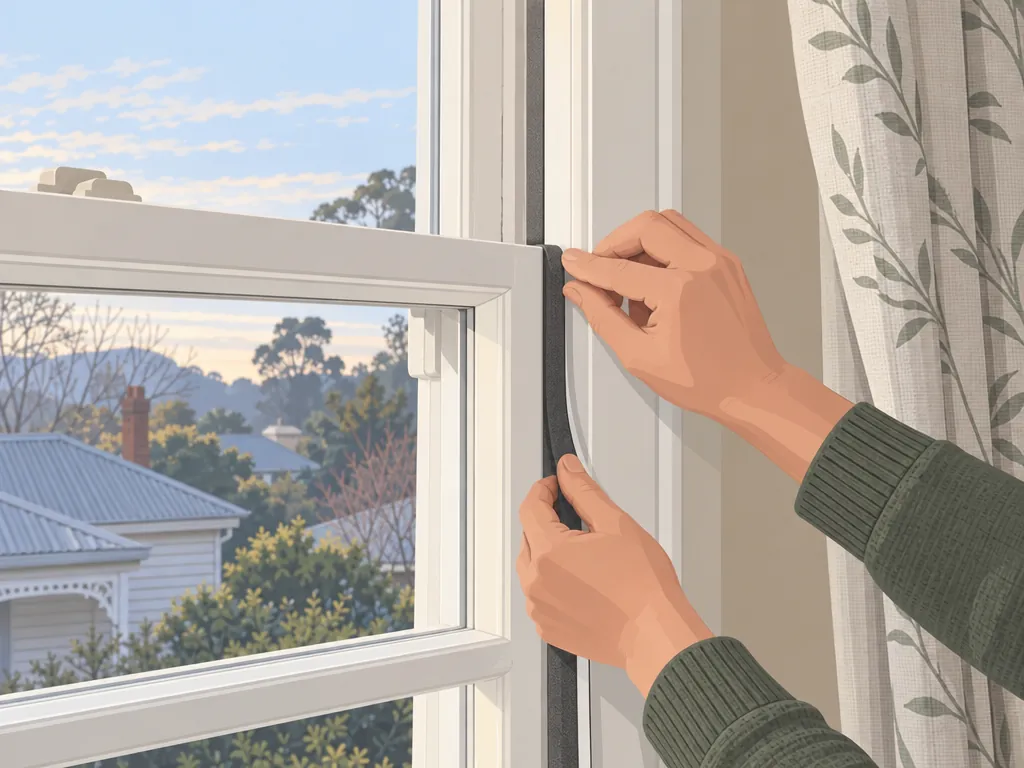
Close-fitting coverings should reach the floor, wrap to the wall either side, and be lined. In cooler months, open them while the sun is on the glass and close them when it goes. In warmer months, close them by day.
Secondary glazing, an acrylic or glass sheet added inside the frame, won't perform as well thermally as a manufactured double-glazed unit because the perimeter can't be fully sealed. It can give good noise control.
Window film can halve a window's SHGC and suits east and west glass. It may reduce light, and glass in direct sun can crack from heat, so use an accredited installer.
Shutters are the covering option that stays put and adjusts with the light. NSW says larger items like shutters should be professionally installed. Our guide on whether plantation shutters are good insulation covers what they do in a Hunter winter.
Can you get a rebate for double glazing or shutters?
NSW Home Energy Saver loan: check before you apply
The NSW windows page, updated July 2026, says there's currently no Australian Government incentive or rebate available for double glazed windows. The NSW external shading page, updated December 2025, says there's no NSW or Australian Government incentive or rebate for external shading.
What NSW does offer is a loan. Home Energy Saver loans are zero-interest, up to $15,000 (checked November 2026), for NSW homeowners or landlords with household taxable income up to $210,000 who are Australian citizens or permanent residents, and double glazing is a listed upgrade. Loans are repayable over up to 10 years, applications are open with no current closing date, and double glazing can't be combined with the SRES or NSW Energy Security Safeguard incentives.
Discounts of up to $4,000 (checked November 2026), for household income up to $80,000 or a concession card, are still listed as coming soon. They need a minimum $200 customer contribution (checked November 2026), and if you want both a discount and a loan, apply for the discount first.
Whether shutters fit the program is its own question, and our Home Energy Saver guide works through it.
Do you need approval to change windows in Maitland?
Changing windows or adding shutters?
Heritage house or Heritage Conservation Area in Maitland?
YesDevelopment consent is required in most circumstances for work on these properties. Ask Council; a $110 heritage minor works approval can confirm whether consent is needed (checked November 2026). Don't start until Council confirms in writing.
Strata unit or apartment?
YesUpgrades to external windows and doors most often need owners corporation approval.
No to bothGet quotes
Check before you commit, especially in an older part of town. Maitland City Council says that in most circumstances, development consent is required for work on a heritage house or property within a Heritage Conservation Area. A $110 heritage minor works approval (checked November 2026) can confirm whether your works need consent, and works must not start until Council confirms in writing.
Council's page doesn't name window replacement or shutters, so ask Council about your own plans before you sign a quote. If you're in Lorn, Morpeth or Central Maitland, our page on shutters for heritage and riverside homes and our guide to shutters for a period home are useful starting points.
In a unit or apartment, upgrades to external windows and doors will most often need owners corporation approval.
Shading blocks up to 90% of the sun's heat; double glazing cuts heat loss up to 30%
Double glazing
- $600 to $2,000+ per window installed (checked November 2026)Source: NSW Government, Double glazed windows
- Stated saving "$500+ per year", depending on your homeSource: NSW Government, Double glazed windows
- Can reduce heat loss by up to 30%Source: energy.gov.au, Windows
- Uw 6.9 aluminium single, 4.2 aluminium double, 3.0 timber/uPVC doubleSource: YourHome, Glazing
- No Australian Government incentive or rebate (NSW page updated July 2026)Source: NSW Government, Double glazed windows
- NSW zero-interest loan up to $15,000 (checked November 2026)Source: NSW Government, Double glazed windows
Shading and coverings
- Effective shading blocks up to 90% of direct sun's heatSource: YourHome, Shading
- NSW's stated saving "40% per year" for external shadingSource: NSW Government, External shading
- No NSW or Australian Government incentive or rebate for external shadingSource: NSW Government, External shading
- The $200 to $5,000+ range covers awnings and solar screens too, so it is not a shutter priceSource: NSW Government, External shading
Windows can lose up to 40% of heating energy and gain up to 87% of heatSource: YourHome, Glazing
Every figure in this guide, on one card, with its source. Keep it beside your quotes when you compare them.
Your next step
Stand in the room that bothers you at the worst time of day. If it's a winter night and the old single-pane glass is the problem, get three quotes for double glazing, ask for the WERS ratings, and look hard at the frame. If it's a summer afternoon with the sun on east or west glass, shading that glass is the fix YourHome rates highest for heat gain, and shading outside the glass does the most.
Either way, seal the gaps first. If shading is your answer, ask Maitland Shutters to measure up and quote for the windows that catch the sun, and which side of the glass suits each one, so you have a real figure to weigh against any glazing quote.
Sources
- https://www.energy.nsw.gov.au/households/upgrades/windows
- https://www.energy.nsw.gov.au/households/upgrades/external-shading
- https://www.energy.nsw.gov.au/households/grants-rebates/home-energy-saver
- https://www.energy.nsw.gov.au/households/grants-rebates/home-energy-saver/loans
- https://www.yourhome.gov.au/passive-design/glazing
- https://www.yourhome.gov.au/passive-design/shading
- https://www.yourhome.gov.au/passive-design/condensation
- https://www.yourhome.gov.au/buy-build-renovate/renovations-and-additions
- https://www.energy.gov.au/households/windows
- https://www.agwa.com.au/WERS/WERS/FAQ.aspx
- https://www.maitland.nsw.gov.au/residents/building-renovations/heritage-development-works
Pictures in this guide are illustrations, not photos of our jobs.
Free in-home measure & quote
The measure is free. The advice comes with it.
Every window here is made to measure, so an accurate price only exists after we have seen your windows and your light. Tell us about the rooms you are thinking about and we will arrange a time, measure each opening, and leave you with a written quote and a straight recommendation. No obligation either way.