

Condensation on Windows in Winter: Why It Happens and What Reduces It
Winter window condensation is moisture from inside your home settling on the coldest surface, so the fixes that work start with cutting that moisture and venting it outdoors, then keeping rooms and surfaces warmer, where good window furnishings help but remove no moisture.
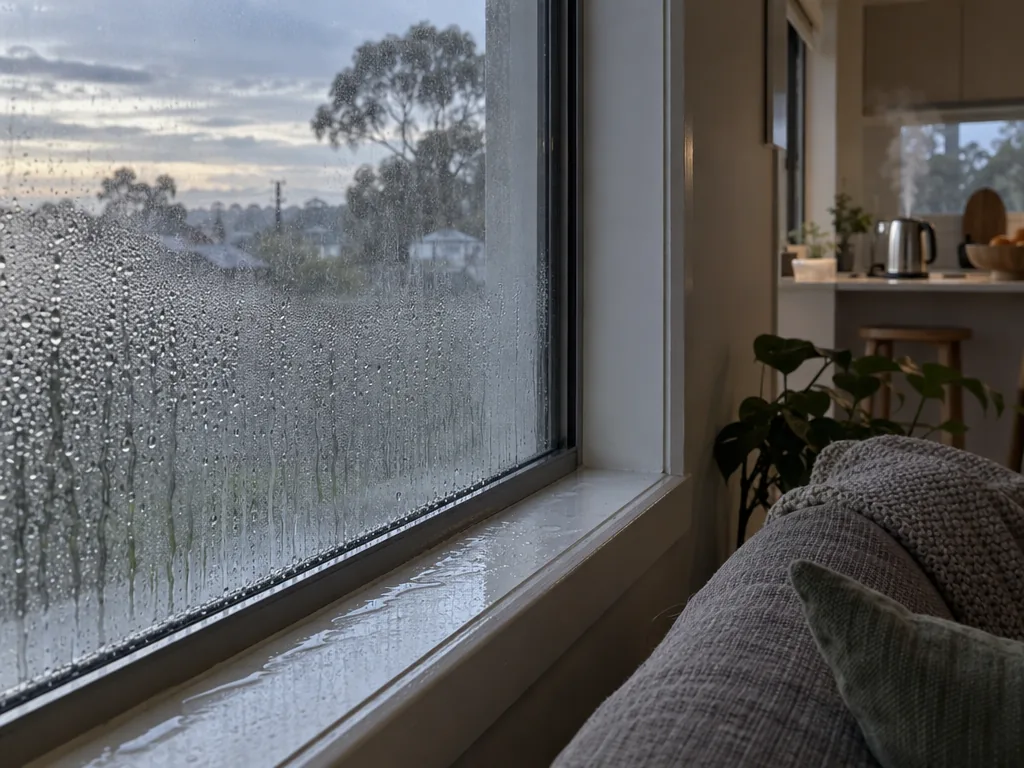
In a 20 °C room at 40% humidity, window glass has to be 14 °C colder than the air before it fogs. At 80% humidity, a drop of just 3 °C does it.
That's our working from YourHome's dew point examples. At 20 °C, the dew point is 6 °C at 40% relative humidity and 17 °C at 80%. Subtract each from the room temperature: 20 minus 6 is 14, and 20 minus 17 is 3.
The point for anyone wiping windows on a cold morning is that the water comes from inside your house. The window is just where it shows. The fixes that work go in this order:
- Cut the moisture.
- Move damp air out.
- Keep rooms and surfaces warmer.
Window coverings belong in that last step, and only there. No blind, curtain or shutter removes moisture from the air.
Why condensation forms on the inside of windows
When does glass fog?
Source: YourHome, Condensation
Condensation forms when humid air meets a cooler surface, and YourHome's own example is a window in winter. Warmer air holds more water vapour. When that air touches something cold enough, the vapour turns back to liquid. The temperature where that happens is the dew point, and glass colder than the dew point of the room air will fog.
Unheated rooms have a smaller margin. YourHome's figures put the dew point at 7 °C for air at 10 °C and 80% humidity. By our working (10 minus 7), glass only 3 °C colder than that room will fog.
Where the moisture in your house comes from
Source: YourHome, Condensation
YourHome names the everyday sources: breathing, showering, cooking, washing and drying clothes inside, and burning gas in a cooktop or gas heater. Every person in the house adds moisture all day and all night. Two people sleeping in a closed bedroom add moisture all night, so that window can be the worst one.
Condensation isn't only a problem of old, draughty houses: YourHome says it can happen in new and old homes alike. In fact, as buildings get more insulated and airtight, their drying potential falls.
How to stop condensation on windows: the fixes in order
-
Cut the moisture
-
Move the damp air out
-
Keep rooms and surfaces warmer
Source: YourHome, Condensation; YourHome, Ventilation and airtightness; Better Health Channel, Mould and your health
First, cut the moisture where it starts.
- Always use exhaust ventilation when cooking and showering.
- Vent bathroom, laundry and kitchen exhausts directly outdoors.
- Dry clothes outside whenever possible, and vent dryers outside.
- Avoid unflued gas heaters, which put the moisture from burning gas straight into the room.
Second, move the damp air out.
Better Health Victoria calls opening a door or window "the cheapest and easiest way" to cut humidity. There is a cost. In cooler climates, ventilating through openable windows will also significantly increase the heating energy required. Our view is to air the room in short bursts, not leave windows open all day. For kitchens and bathrooms, YourHome describes extractor fans vented outdoors as a reliable way to control moisture.
Third, keep rooms and surfaces warmer.
YourHome's list for colder months is heat, insulation, draught sealing and good window furnishings, to keep the home warmer and raise surface temperatures. It also suggests you move furniture away from high-risk external walls, so air can reach those cold surfaces.
None of this is free. YourHome is upfront that some condensation strategies come at a cost of increased energy use, so the best approach is a combination rather than any single fix.
Does a dehumidifier help with condensation on windows?
It's one of the listed options, but not the first one. Better Health Victoria's steps to lower indoor humidity include reverse-cycle air conditioning or mechanical dehumidification if available. Exhaust fans, vented dryers and opening a door or window sit alongside it.
The same page says the way to control indoor mould growth is to control the source of moisture. A dehumidifier makes the most sense once the showers, cooking and washing are already vented or moved outside, rather than as a stand-in for them. Like heating, it runs on power, which is the energy trade-off YourHome warns about.
Keeping the glass warmer: draughts, glazing and frames
Whole-window U value (Uw), lower is better
Source: YourHome, Glazing
Windows matter because of how cold the glass gets. YourHome lists significant heat loss and condensation in winter as a result of poorly designed glazing, and says up to 40% of a home's heating energy can be lost through windows. Keeping surfaces above the dew point can involve double or triple glazing and thermally improved frames.
The published whole-window figures show the gap. A single-glazed aluminium window rates Uw 6.9, and a double-glazed timber or uPVC window rates Uw 3.0, where lower is better. By our estimate (6.9 divided by 3.0), the single-glazed aluminium window lets through about 2.3 times as much heat for the same temperature difference.
Draughts are the cheaper place to start. The federal energy site's advice for windows is to seal gaps with foam strips, sealant or gap-filler rod. Air leaks can account for 15 to 25% of winter heat loss, a CSIRO 2015 figure that YourHome quotes.
Sealing a house up for warmth isn't a free win, because an airtight house with inadequate ventilation may lead to condensation, mould and high internal levels of carbon dioxide. Seal the gaps, and keep the exhaust fans running.
If you're replacing windows anyway, NSW's energy site puts double glazing at $600 to $2,000+ per window, installed (checked October 2026), and calls it a major upgrade for building or renovating. NSW homeowners and landlords who are Australian citizens or permanent residents, with a combined household income of up to $210,000, can use zero-interest loans of up to $15,000 under the NSW Home Energy Saver program for it (checked October 2026). The same page says there's currently no Australian Government incentive or rebate available for double glazed windows. Our guide to the NSW Home Energy Saver Program covers who qualifies.
There is also a middle option. Secondary glazing reduces U value and air infiltration, though it can't be perfectly sealed.
Where shutters and window coverings fit, and where they don't
Close-fitting coverings
- Reaches the floor
- Wraps to the wall either side
- Tightly woven
Source: energy.gov.au, Windows
At Maitland Shutters, we'd rather you hear this before you buy anything: a window covering doesn't take moisture out of the air, and it isn't a substitute for ventilation. If the moisture fixes above aren't in place, no covering will solve the problem.
What coverings can do is help with the third step. YourHome counts good window furnishings among the ways to keep a home warmer and raise surface temperatures. It says furnishings such as louvres, blinds and curtains can be used to improve the thermal performance of your windows, and that they are especially useful on existing windows. The NSW Government also suggests using blinds, shades, and curtains to add insulation.
How you use them matters as much as what you choose. The federal advice is to open coverings in the day when the sun is shining, and close them when the sun stops coming in to retain heat. It also favours coverings that are close-fitting, reach the floor, wrap to the wall either side and are tightly woven.
For more on the heat side, see Are Plantation Shutters Good Insulation? and Shutters vs Blockout Blinds. For a bathroom or laundry window, where a covering has to cope with daily steam, see Waterproof PVC Shutters.
Fog between the panes: when it isn't humidity
Source: YourHome, Glazing; YourHome, Condensation
Water you can wipe off the room side of the glass is indoor moisture, and the fixes above apply. Moisture inside a double-glazed unit is a different problem. YourHome notes that inadequate desiccant [in the spacer] may cause moisture to condense on the glass surface in cold conditions. Better ventilation won't reach the inside of a sealed unit, so a glazier is the right person to look at it.
Mould on window frames and sills: what to do
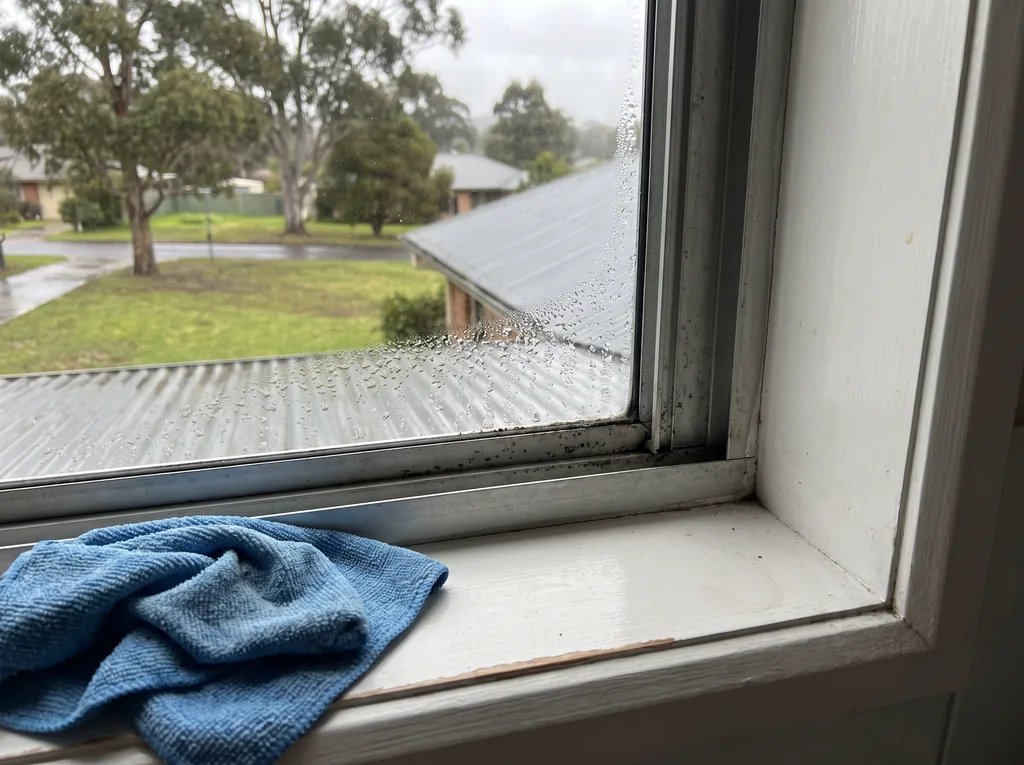
Condensation that sits on a frame night after night is where mould starts. Better Health Victoria lists wiping up condensation on windows and shower glazing among its steps. A quick wipe of the glass and a dry cloth along the sill and seals each cold morning is a small job worth doing.
Mould often looks like "fuzz" or appears to be a stain. It matters for health: it can trigger congestion, sneezing, cough and wheeze, and can worsen asthma and allergies.
If mould keeps coming back after you've dealt with the moisture, or someone in the house has symptoms, get advice. See a GP about the symptoms, and a tradesperson about any leak or exhaust that isn't venting outdoors.
Condensation on windows at a glance
Moisture
Sources: breathing, showering, cooking, drying clothes inside, burning gas. (YourHome)
Fix: exhausts vented directly outdoors, clothes dried outside whenever possible. (YourHome)
Air
Opening a door or window is the cheapest and easiest way to cut humidity, but in cooler climates it significantly increases heating energy. (Better Health Channel; YourHome)
Three things decide whether your windows run with water: how much moisture the house makes, where the damp air goes, and how cold the glass gets. Fix them in that order. Use coverings to help keep the room warm, not to replace the fans.
Talking a cold, damp room through with Maitland Shutters
If your windows fog every morning, start with the fans, the washing and the gas heater. Those steps tackle the cause. If the room is also cold and you're weighing up coverings as part of keeping it warmer, the next step is a measure and quote. You can book a measure and quote here. Tell us which room fogs up, and we'll start the conversation with the moisture rather than the shutters.
Sources
- YourHome, Condensation: https://www.yourhome.gov.au/passive-design/condensation
- YourHome, Ventilation and airtightness: https://www.yourhome.gov.au/passive-design/ventilation-airtightness
- YourHome, Glazing: https://www.yourhome.gov.au/passive-design/glazing
- energy.gov.au, Windows: https://www.energy.gov.au/households/windows
- Better Health Channel, Mould and your health: https://www.betterhealth.vic.gov.au/health/conditionsandtreatments/mould-and-your-health
- Energy NSW, Windows: https://www.energy.nsw.gov.au/households/upgrades/windows
Pictures in this guide are illustrations, not photos of our jobs.
Free in-home measure & quote
The measure is free. The advice comes with it.
Every window here is made to measure, so an accurate price only exists after we have seen your windows and your light. Tell us about the rooms you are thinking about and we will arrange a time, measure each opening, and leave you with a written quote and a straight recommendation. No obligation either way.