

Shutters vs blockout blinds for heat and glare
We sell one of these, so read with that in mind. But the comparison below is the one we give across kitchen benches, including the two places we tell people a blockout is the better buy.
The one-sentence version
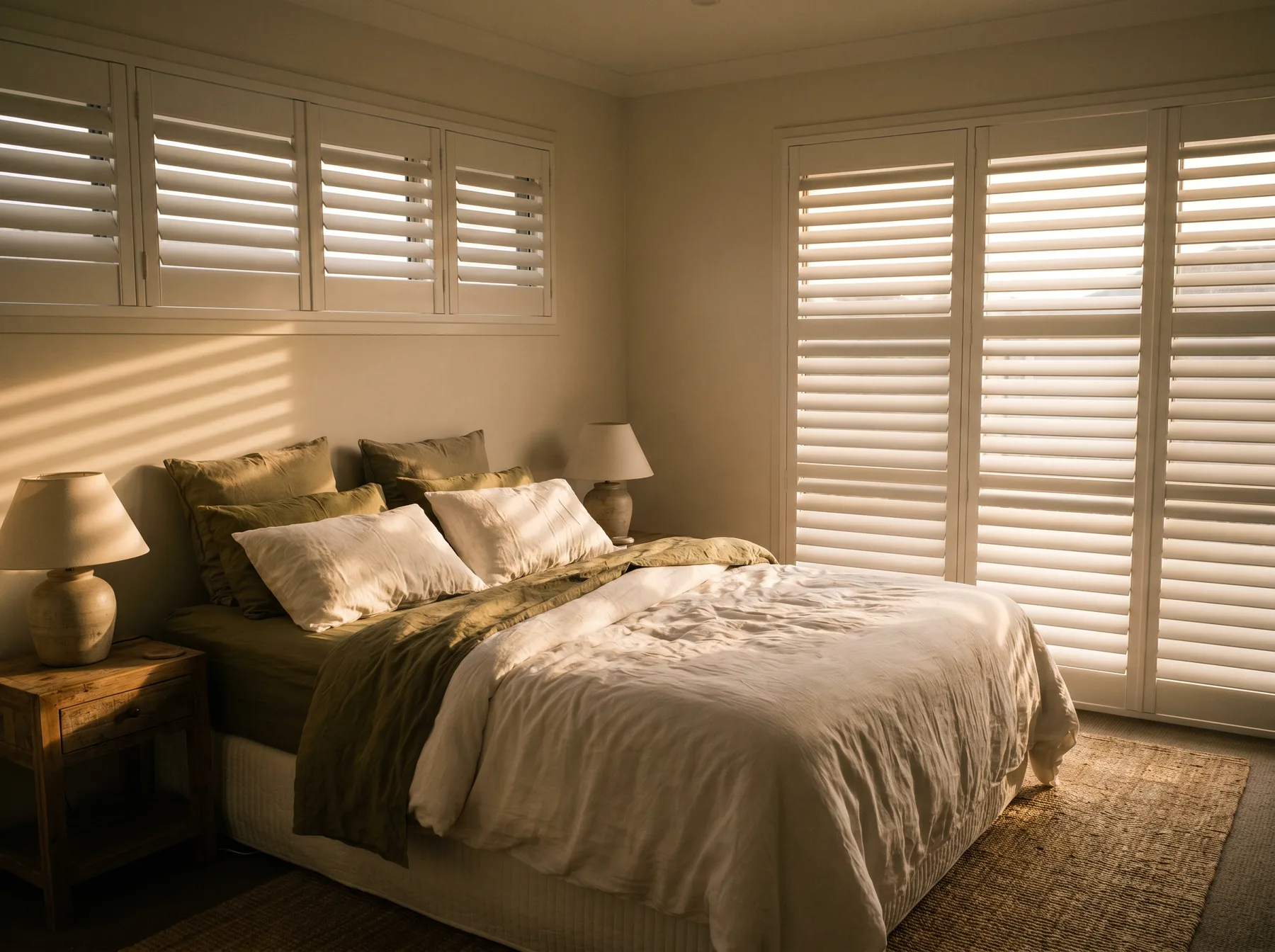
A blockout blind has two settings, open or dark; a shutter has ninety degrees of tilt in between, so it can cut glare and heat while the room stays bright and the air keeps moving. Everything else in this guide is detail on that sentence.
The comparison, honestly
| What you are buying | Blockout blind | Plantation shutter |
|---|---|---|
| Glare control | Total, but only by going dark | Dialled by tilt; room stays daylit |
| Heat control | Good when fully down | Good, adjustable through the day; exterior aluminium better again |
| Airflow while shaded | None; the blind blocks the breeze with the light | Blades pass air at any tilt; windows stay usable on summer evenings |
| View while shaded | None | Feathered tilt keeps the yard in sight |
| Privacy at night | Total | Very good closed; thin light lines at the blade edges |
| Total darkness for shift-sleepers | The winner, fitted in channels | Dim, not black |
| Wet areas | Fabric holds moisture | Waterproof PVC is made for them |
| Life span and upkeep | Mechanisms and fabric age; replacement is the maintenance plan | A fitted piece of joinery; wipes clean, repaints if you rework the room |
| Up-front cost | Lower, usually meaningfully | Higher; it is made-to-measure joinery, priced after a measure |
| Value story | A window covering | A fitting that stays with the house and reads as part of it |
Where the blockout honestly wins
Two places. A shift-worker's bedroom that must be black at midday: a channel-fitted blockout does true darkness better than any louvre, and we say so. And a strict budget across many windows: blinds cover more glass for less money, and if the choice is a blockout everywhere or shutters on two windows, the right answer depends on which rooms are actually suffering, which is a conversation, not a slogan.
Our usual counsel for that second case: put the shutters where the sun does its damage, the west-facing living glass first, and let quieter windows wait. A house rarely needs its whole self shuttered at once; it needs its worst room fixed first.
Why the airflow point matters more in Maitland
On the coast, the afternoon sea breeze does half the cooling work. Out here it arrives late and tired, so a Maitland evening relies on cross-ventilation through open windows exactly when the western sun is at its worst. A blockout makes you choose: breeze or shade. Shutter blades tilted up give you both at once, which is why the further inland you live, the stronger the shutter case gets.
The cost question, without a number
Shutters cost more than blinds up front; anyone who tells you otherwise is selling something strange. What we will not do is put a figure here, because every panel is made to a measured window and honest pricing follows the measure. How that pricing works, and what moves it, is laid out in the cost guide. The measure and the quote are free either way, and the quote is per window, so you can stage the house in whatever order sense dictates.
Book a free measure & quoteFree in-home measure & quote
The measure is free. The advice comes with it.
Every window here is made to measure, so an accurate price only exists after we have seen your windows and your light. Tell us about the rooms you are thinking about and we will arrange a time, measure each opening, and leave you with a written quote and a straight recommendation. No obligation either way.