

The west-facing room
Every house has one, and in Maitland it works harder than anywhere on the coast: the room whose glass faces the afternoon. Here is how we fit it, decision by decision.
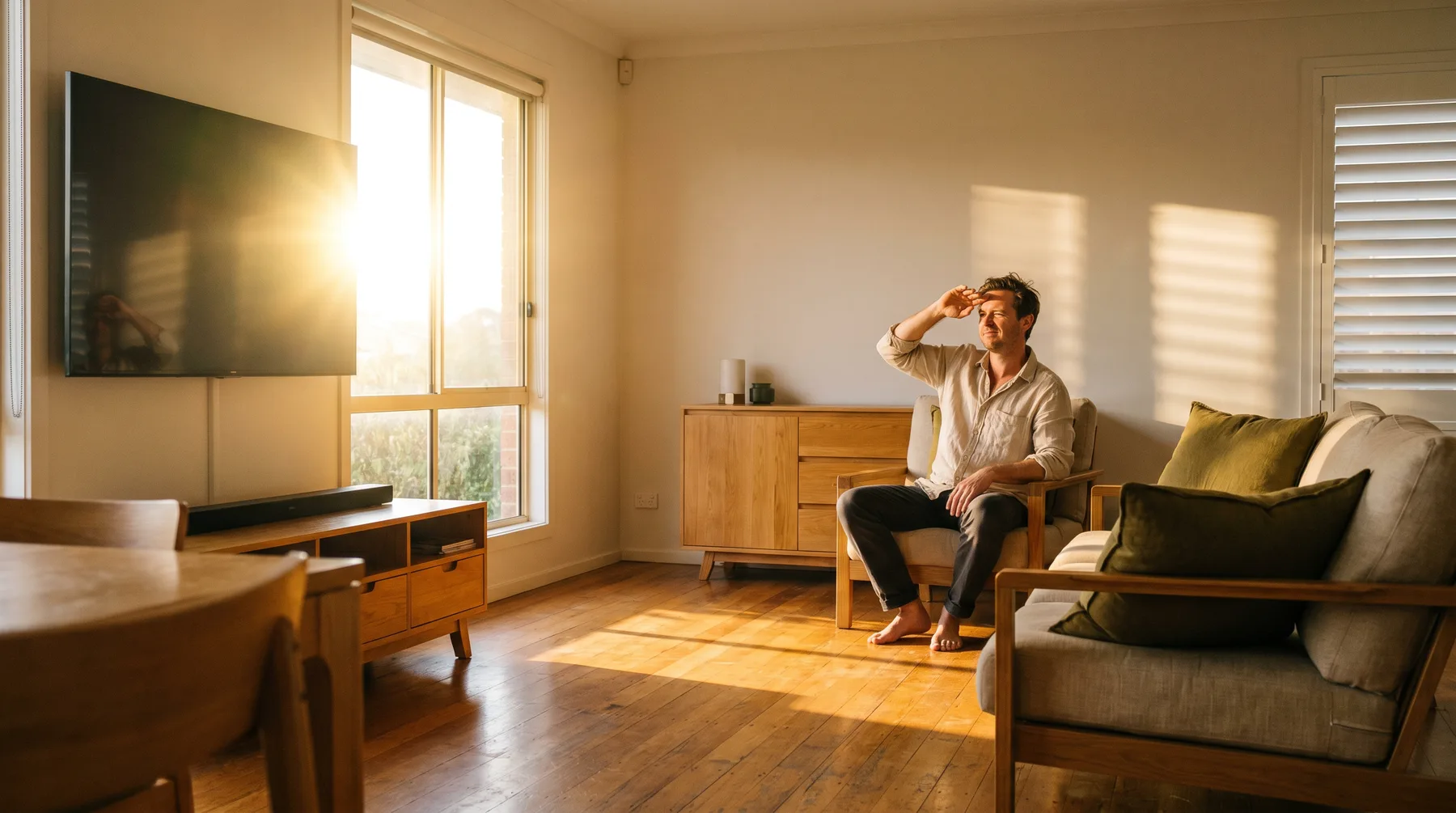
The western sun is a different animal from the northern sun. North light comes from high overhead and a modest eave handles it. West light arrives low, at the end of the day, under every eave and awning you own, when the house has already been soaking up heat since noon. Nothing on the outside of a standard project home is pointed at it. That is why the west-facing room is the one that fails first in January, and the one shutters transform most.
Why tilt beats blockout here
A blockout blind can absolutely stop western glare; it does it by deleting the window. Down comes the blind at 4pm, on go the lights, and the room you paid a premium for spends its best hours pretending to be a cinema. The whole case for a shutter in a west room is that the blade angle is a dial: tilted up, the louvres catch the low sun and throw it back at the sky, while daylight keeps bouncing in off the blade faces and the breeze keeps moving through the gaps. Bright room, no glare, air still moving. Windows are also the biggest heat hole in a house's fabric; the Australian Government's YourHome guide puts up to 87 per cent of a home's heat gain through glazing, which is why shading the glass, rather than the room, is where the fight is won.
Blade width: go wider than you think
For west glass in living areas we usually start the conversation at 89 mm and often land on 114 mm. The wide blade does two things for a west room. Open, fewer blades means more view and more reflected daylight. Tilted, the deep blade throws a deeper shadow, so you reach the no-glare angle with less tilt and keep more of the outlook. The trade-off is a chunkier look on small windows, which is why the answer is per window, not per house. The full width story, including where 63 mm wins, is in the louvre width guide.
Tilt direction: up, not closed
The single most useful habit for a west room costs nothing: in the late afternoon, tilt the blades up, toward the sky. The low sun hits the top face of each blade and reflects out, the sight line to the yard survives under the blades, and the room stays lit by sky rather than by direct beam. Come dusk, feather them open again. Hidden tilt makes the habit effortless: touch one blade anywhere on the panel and the wall of louvres follows.
Material: where each one earns the west
- Timber (basswood): the default for a dry west-facing living room or bedroom; light on its hinges at big sizes and takes the finish your room wants.
- PVC: the hard-wearing pick where the west room is also the kids' domain, and the only pick if the west window is in a kitchen or bathroom.
- Exterior aluminium: when the heat load is the real enemy, panels outside the glass stop it before it enters. The full decision is in interior vs exterior aluminium; the short version is that brutal, all-afternoon exposure on big glass is exterior territory.
The UV footnote your floorboards care about
West light does its fading in the same two hours it does its glaring. Timber floors, rugs and upholstery in the beam line pay for every bare summer afternoon. Blades tilted just past the glare angle drop the direct UV on the floor while keeping the room in daylight; it is the cheapest floor insurance a west room can buy.
What we would check at your measure
- The actual beam path at the end of the day: where the sun enters, what it crosses, what it ruins
- Glass sizes and spans, which decide whether 114 mm blades and a mid-rail earn their place
- Stacker or sliding doors on the west face, which bring bi-fold and bypass panels into the conversation
- Whether the heat argument is strong enough to price exterior aluminium alongside the interior fit
Or run the room through the 5pm Test first; it will rough out the blade, tilt and material in two minutes, and carry your answers into the enquiry so the measure starts ahead.
Sources
- YourHome: Glazing (Australian Government): up to 87% of a home's heat gain and up to 40% of its heating loss moves through windows; the case for managing the glass, not the room.
Free in-home measure & quote
The measure is free. The advice comes with it.
Every window here is made to measure, so an accurate price only exists after we have seen your windows and your light. Tell us about the rooms you are thinking about and we will arrange a time, measure each opening, and leave you with a written quote and a straight recommendation. No obligation either way.